
A Practitioner’s Honest Take on Muscle Response Testing
Most new clients at our clinic in Jumeirah Lakes Towers arrive with a story that’s grown longer than they’d like: bloating that comes and goes for no reason, eczema that flares after certain meals, sinuses that never quite clear, energy that disappears by 2pm. Usually they’ve already tried the obvious things — cutting out gluten, seeing three different specialists, a cabinet full of supplements — and they’re still not sure what’s actually going on.
So when I ask them to hold a small glass vial while I press gently on their arm, I get the look. You know the one. It’s somewhere between “is this a joke” and “please don’t waste my time.”
I don’t blame them. I made that same face once.
I Didn’t Believe in This Either
When I first trained in Applied Kinesiology — and the muscle response testing that sits at the centre of it — my background was practical, clinical, skeptical. Pressing on someone’s arm to learn something about their gut health sounded, frankly, unlikely.
But I learned the protocol properly, the way it’s meant to be taught, and I started using it as part of NAET, the allergy elimination method Dr. Devi Nambudripad developed from it. If you’re curious about the mechanics of that process, I’ve written separately about how NAET treats allergies. Ten years and roughly five or six clients a day later — you can do the math, it adds up to thousands of sessions — my skepticism is long gone. Not because I stopped questioning it, but because the pattern held up, session after session. Applied Kinesiology is an energetic assessment, not a medical diagnosis, and I’m careful never to blur that line with clients. Still, what I see on the table again and again lines up with what people already know from their own IgG and IgE results — often flagging a stress pattern well before any blood panel would catch it.
Where Applied Kinesiology Actually Comes From
It’s worth knowing this isn’t something invented for a wellness trend. Applied Kinesiology was developed in the 1960s by an American chiropractor, George Goodheart, who noticed that muscle strength seemed to shift in response to things that had nothing to do with physical exertion. Over the following decades it branched into different systems — NAET, which is what we practise here, being one of them, built specifically around allergy and sensitivity work.
I mention this partly because it matters, and partly because it usually gets people to relax a little. This isn’t a technique I invented on the fly. It has a lineage, a set of protocols, and decades of practitioners refining how it’s done properly.
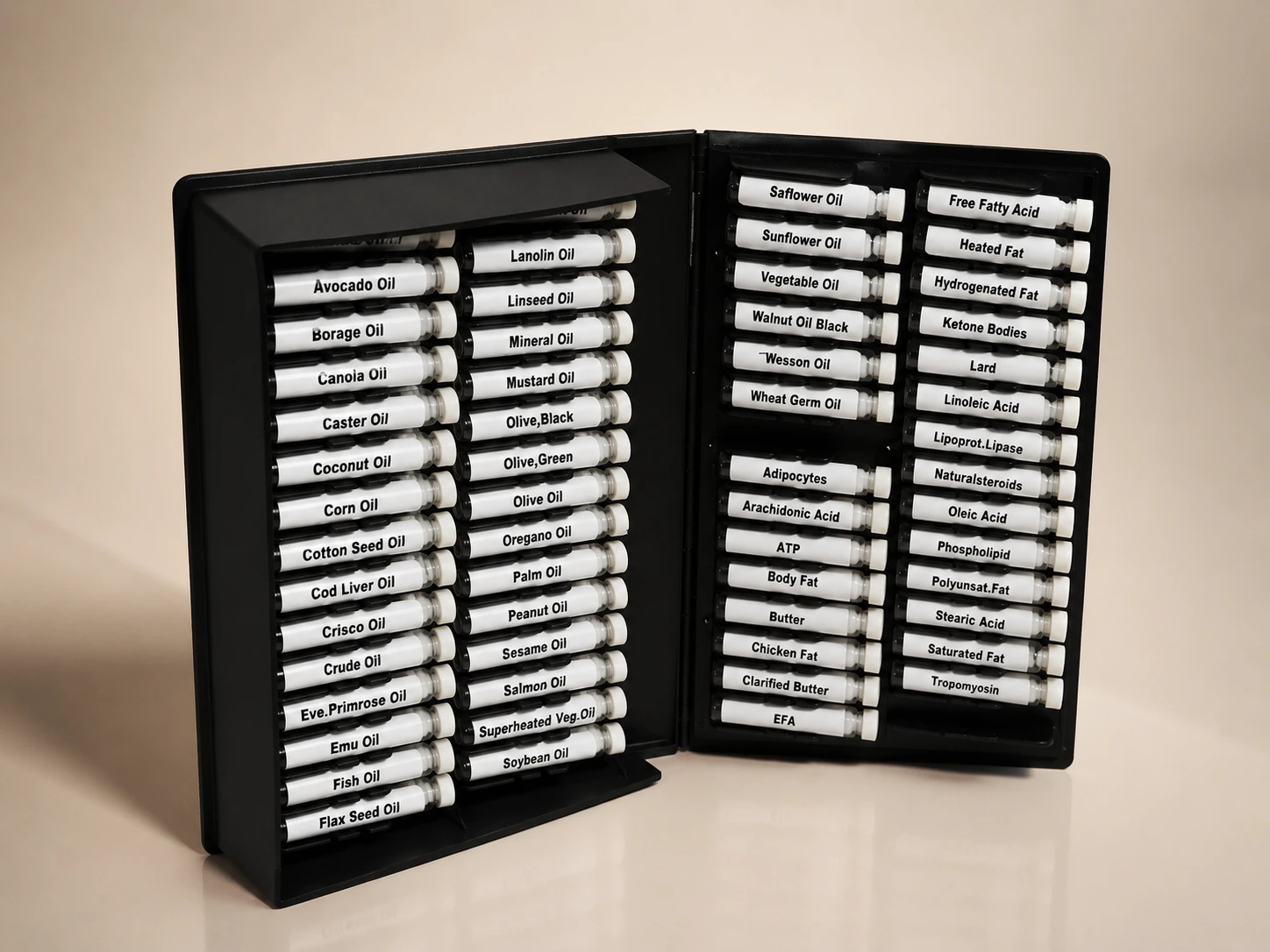
So What Is Applied Kinesiology Actually Doing?
It isn’t a test of how strong you are, and it isn’t some parlour trick. It’s biofeedback, plain and simple — your nervous system talking, in real time, through your muscles. Muscle response testing is simply the hands-on method Applied Kinesiology uses to have that conversation.
Under normal circumstances, your brain and your muscles are in constant, split-second communication. When something in front of you is neutral or compatible, that conversation stays smooth, and the muscle I’m testing — usually in your arm — holds firm under light pressure.
When something isn’t neutral — a food you’re sensitive to, dust, mould from the AC unit you’ve been sitting under all day — the nervous system registers that disruption before you’re consciously aware of anything. And for a split second, the muscle yields. It’s not you being weak. It’s your body redirecting its attention.
Applied Kinesiology vs. a Blood Test — What’s the Actual Difference?
It helps to be precise about this, because the two are answering different questions:
- IgG/IgE blood tests measure specific antibodies your immune system has produced, sitting in your blood serum.
- Applied Kinesiology / muscle response testing measures how your nervous system reacts, right now, when it encounters the electromagnetic signature of a substance.
One tells you what your immune system has already built up over time. The other tells you what’s creating friction in your system today. They’re not competing tools — they’re just looking at different things, and I’ve never seen a reason to pick one over the other. They’re more useful together.
The Moment People Stop Being Skeptical
Some of my favourite sessions are with the clients who are sure this won’t work on them. Strong, athletic, confident that no amount of light pressure is moving their arm.
Then we bring in a vial holding the frequency of something like dairy, or dust, or the mould sitting in their AC filter — and their arm drops. Every time, there’s a moment of genuine surprise, followed by the usual round of:
“Wait, are you pushing harder?”
“Okay, let me really hold it this time.”
“Can we try my other arm?”
The result doesn’t change. And once someone realises I’m not adding any extra force — that the muscle is simply doing what it does — the scepticism usually turns into curiosity. It’s a hard thing to argue with, because you’re not taking my word for it. You’re feeling it happen in your own arm.
Why the Technique Itself Matters So Much
This only works if it’s done properly, and that’s the part people underestimate. You can’t just press down on an arm and call it a diagnosis. Too much pressure, too little, or a baseline that hasn’t been properly established, and you’ll get a false reading either way.
At NAET Dubai, every session follows the same groundwork:
- Baseline first. We check that a client’s foundational energy is balanced before we test anything at all — otherwise nothing after that point means much.
- Posture matters more than people expect. Foot placement, arm angle, all of it affects how clean the neurological signal comes through.
- Placement has to match the test. A gut-related item gets held near the solar plexus; something respiratory gets tested near the chest or nose. It’s not random.
A Few Questions I Get Asked Constantly
Is Applied Kinesiology scientifically proven? Not in the way a blood test is. It’s an energetic assessment, and I present it as exactly that — not a diagnosis, and not a replacement for medical testing. What I can say is that one small study, Leisman et al. (2001), found a correlation between muscle testing responses and serum immunoglobulin levels in food allergy cases — an interesting data point, not proof. I’d rather be upfront about that than oversell it.
Does it hurt, or is it safe for children and during pregnancy? No — it’s just gentle, external pressure on a muscle, nothing invasive. We adapt the approach for children and for pregnant clients as a matter of course; if that’s your situation, it’s worth mentioning when you book so we can tailor the session.
How is NAET different from general Applied Kinesiology? Applied Kinesiology is the broader assessment method. NAET takes that same muscle response testing and applies it specifically to identifying and working through allergies and sensitivities — it’s the branch we specialise in here.
How many sessions before people usually notice something? It varies a lot by person and by what we’re working through, but most clients start noticing a change in how their body handles a specific trigger within the first few sessions rather than after a single visit.
Can this replace an allergy blood test? No, and I wouldn’t want it to. Think of it as a different lens on the same picture — useful alongside your existing results, not instead of them.
If You’ve Been Stuck, This Might Be Worth Trying
If digestive issues, skin flare-ups, fatigue, or seasonal allergies have been following you around Dubai without a clear explanation, it might be worth listening to what your nervous system already knows.
Applied Kinesiology won’t diagnose you, and it isn’t a replacement for medical care — but it is a non-invasive, immediate way of picking up on what your body is tolerating well, and what’s quietly draining it. If skin issues are what brought you here, our eczema and skin sensitivity testing page walks through that side of things in more depth.
Come visit us at NAET Dubai in Jumeirah Lakes Towers, and let’s find out what your body has been trying to tell you.